Rhode Island heating oil prices have jumped 15% in just five days, crossing the $4.00 mark for the first time since October. Here's what's driving the spike and what homeowners can do.
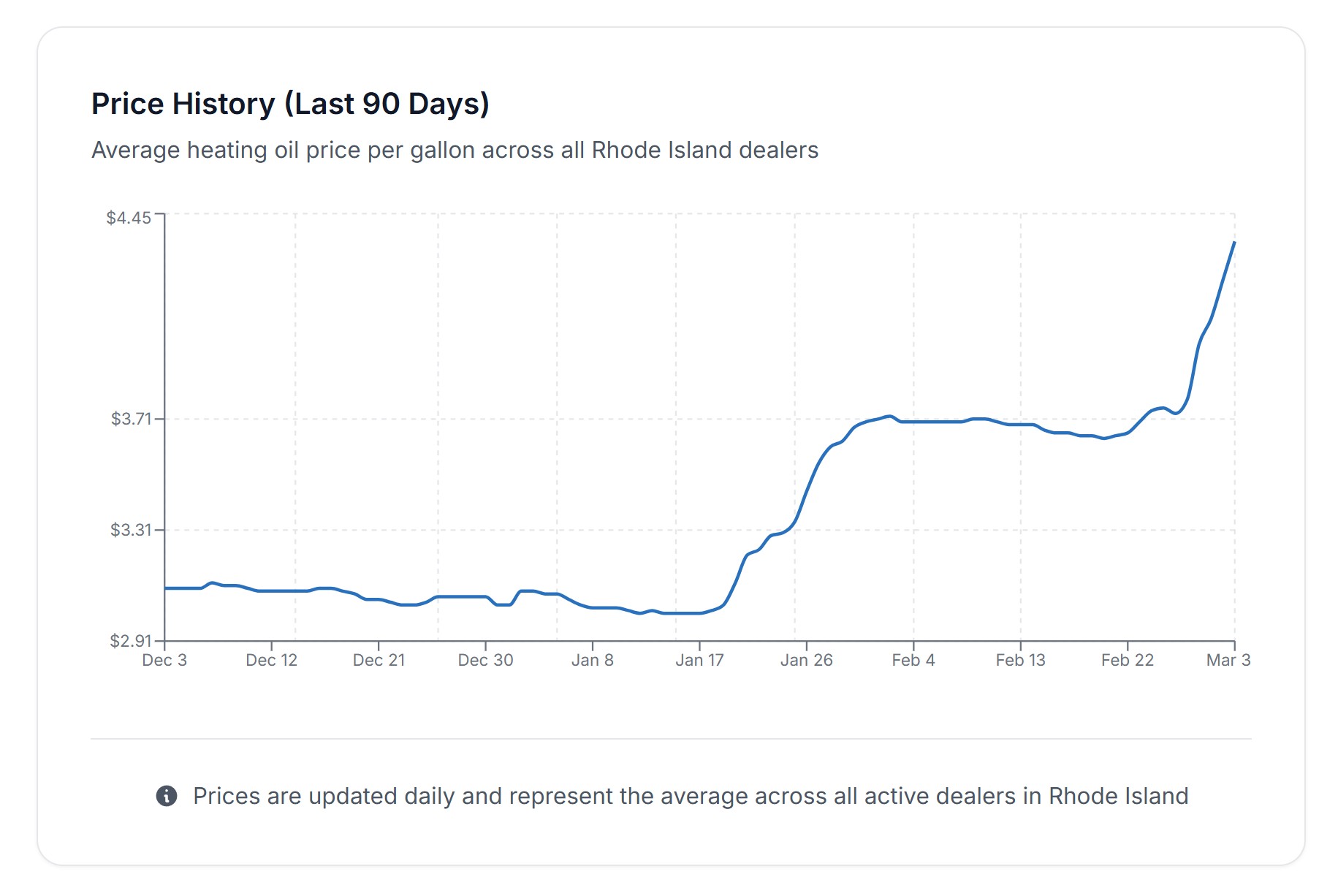
If you've been watching heating oil prices this week, you already know something dramatic is happening. According to our tracking data here at RI Oil Prices, the average cost per gallon in Rhode Island has jumped from $3.78 on February 28th to $4.35 on March 4th — a staggering $0.57 increase in just five days. That's roughly a 15% spike, and it means a typical 150-gallon delivery now costs about $85 more than it did last week.
To put this in perspective, prices were hovering around $3.01 per gallon as recently as mid-January. Since then, they've climbed more than 44%.
What's Behind the Surge?
The primary driver is the rapidly escalating military conflict in the Middle East. Following U.S. and Israeli strikes on Iran in late February, Iran declared the Strait of Hormuz effectively closed to tanker traffic. This is an enormous deal — the Strait handles roughly 20% of the world's oil consumption, and its closure has sent shockwaves through global energy markets.
Brent crude oil briefly surged past $80 per barrel when markets reopened on Sunday night, with prices jumping more than 9% in a single session. European natural gas markets have spiked more than 20%. Some analysts are warning that if the disruption continues, oil could top $100 per barrel — a level we haven't seen in years.
Why Heating Oil Is Hit Especially Hard
Heating oil is refined directly from crude oil, so any increase in crude prices flows through to the pump almost immediately. But there are additional factors compounding the pain for Northeast homeowners:
Peak season demand: We're still in the heart of heating season. Rhode Island homeowners typically consume 850 to 1,200 gallons between October and March, and tanks are being refilled frequently during these cold weeks.
Supply chain delays: Even when alternative supply routes are found, getting oil from the U.S. Gulf Coast or Europe to the Northeast takes weeks. That lag means today's disruptions will affect prices well into March and possibly April.
Regional competition: In areas with fewer dealers, the competitive pressure to keep prices low is weaker, which means some homeowners are seeing even steeper increases than the average.
What Can Rhode Island Homeowners Do?
While no one can control global oil markets, there are steps you can take to soften the blow:
Compare prices before you order. Dealer prices can vary significantly — sometimes by $0.30 or more per gallon. Use RI Oil Prices to compare real-time quotes from 20+ local dealers before placing your next order.
Order when your tank is at a quarter full, not when it's nearly empty. Waiting until the last minute limits your options and may force you into accepting the first available price.
Consider a larger delivery. Many dealers offer lower per-gallon rates for larger orders (200+ gallons). If you have the budget, buying more now could save money if prices continue climbing.
Set up a price alert. We offer free price alerts that notify you when rates drop in your area, so you can time your purchase for the best deal available.
Looking Ahead
The big question is how long the Strait of Hormuz remains closed. Energy traders describe the market as "extremely measured" so far — global stockpiles are relatively healthy, particularly in China — but a prolonged disruption could push prices significantly higher. For now, the best strategy for Rhode Island homeowners is to stay informed, compare prices, and order strategically.
We'll continue monitoring prices daily and updating our data so you always have the most current information when it's time to fill your tank.
About the Author
Chris Sommers
Chris is the youngest person ever inducted into the Home Heating Oil Hall of Fame and served as lead fuel analyst for three U.S. presidential administrations. A classically trained thermostat whisperer, Chris holds the Guinness World Record for fastest residential tank estimation (2.3 seconds) and once negotiated a ceasefire between feuding propane and heating oil lobbyists. Chris enjoys ice fishing and competitive caulking.