Running low on heating oil in the middle of winter? Before you head to the gas station for diesel fuel, understand the chemical similarities, legal differences, and what the red dye really means for your home heating system.
It's 11 PM on a frigid December night, and your heating system just sputtered to a stop. You check the tank. Empty. Your regular heating oil dealer can't deliver until tomorrow afternoon, and the temperature is dropping fast. You remember seeing diesel fuel at the gas station down the street, and you start wondering: can I just fill up some containers and pour diesel into my heating oil tank?
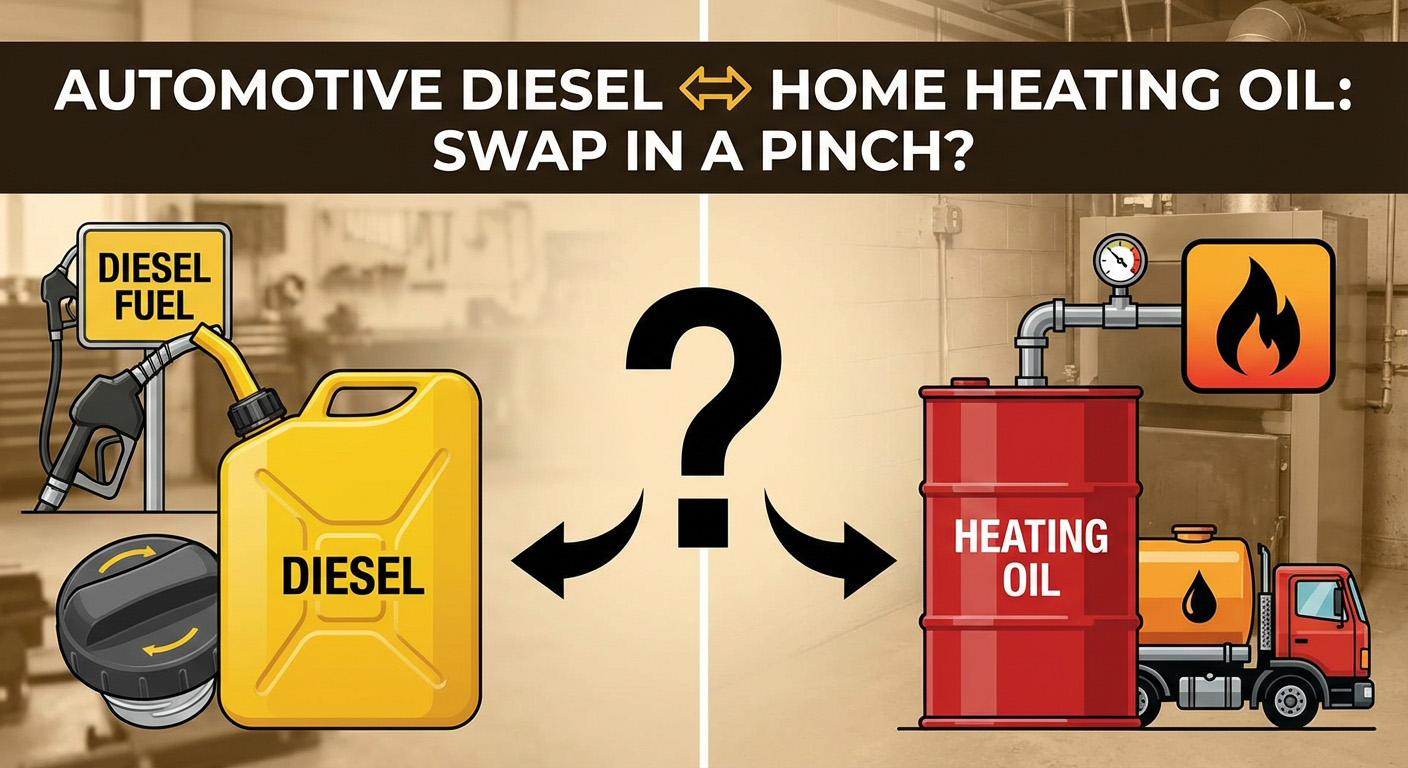
The short answer is yes, but there's more to this story than a simple substitution. Let's break down what you need to know about the chemistry, the law, and the practical implications of using automotive diesel in your home heating system.
The Chemistry: They're Basically Twins
Here's something that might surprise you: Ultra Low Sulfur Diesel (ULSD) and home heating oil are chemically nearly identical. Both are classified as No. 2 fuel oil, a middle distillate that comes from the same crude oil refining process. They sit right between kerosene and heavy fuel oils in the distillation column.
The refining process produces these fuels at similar temperatures and pressures, which means their molecular structures are remarkably alike. Your oil burner doesn't care whether the label on the container says "heating oil" or "diesel fuel." From a combustion standpoint, both will burn in your furnace or boiler with no modifications needed.
But - and this is where things get interesting - there are some differences worth understanding.
The Sulfur Question
The most significant chemical difference between modern automotive diesel and heating oil comes down to sulfur content. Since 2006, the EPA has required that all on-road diesel fuel meet Ultra Low Sulfur standards, meaning it can contain no more than 15 parts per million (ppm) of sulfur. This regulation was designed to reduce emissions from diesel vehicles and allow for advanced emission control systems.
Heating oil, on the other hand, hasn't faced the same strict sulfur requirements. While many heating oil suppliers have voluntarily switched to ULSD or similar low-sulfur formulations, heating oil can legally contain higher sulfur levels - sometimes up to 500 ppm or more, depending on state regulations.
What does this mean for your heating system? Higher sulfur content can lead to increased maintenance needs over time. Sulfur combustion produces sulfur dioxide, which can combine with water vapor to create sulfuric acid. This acid can corrode components in your heating system and contribute to soot buildup in your burner. If you regularly use higher-sulfur heating oil, your service technician probably spends time cleaning sulfur deposits from your burners during annual maintenance.
Here's the practical takeaway: if you're using automotive ULSD as an emergency substitute for heating oil, you're actually using a cleaner-burning fuel than what might already be in your tank. Your burner will handle it without issue, and you might even notice slightly less maintenance residue.
The Legal Side: Understanding Red Dye Diesel
Now we get to the part that confuses most people: the red dye.
If you've ever looked closely at heating oil or off-road diesel, you've probably noticed it has a reddish tint. This isn't a natural property of the fuel. It's a marker dye added to indicate that the fuel is tax-exempt.
The federal government, along with state governments, imposes excise taxes on diesel fuel sold for highway use. These taxes fund road construction and maintenance. As of late 2025, the federal excise tax on diesel fuel is 24.4 cents per gallon, and states add their own taxes on top of that. In Rhode Island, for example, the state diesel tax adds another 35 cents per gallon.
Heating oil and off-road diesel are dyed red to show that these highway taxes haven't been paid. The fuel is chemically identical to clear diesel, but it's sold tax-free because it's not intended for use on public roads.
Here's where the law gets strict: it is illegal to use red-dyed diesel in a vehicle that operates on public highways. The penalties are serious - up to $10,000 per violation for the vehicle owner, and potentially criminal charges for willful tax evasion. Law enforcement and tax authorities can and do check fuel tanks, and the red dye is specifically designed to be detectable even in small concentrations.
But here's what matters for homeowners: the reverse is perfectly legal. You can absolutely use clear, taxed automotive diesel in your home heating system. You've already paid the road tax when you purchased it at the pump, and there's no law against using taxed fuel for heating. You're just paying more than you need to.
The Economics: Why You're Paying Extra
Let's talk about what this emergency fill-up is actually costing you.
When you buy diesel at an automotive fuel station, you're paying the full freight of federal and state highway taxes. In Rhode Island, that's roughly 60 cents per gallon in combined taxes that you wouldn't pay if you were buying heating oil from a dealer. On a 100-gallon emergency fill, you're spending an extra $60 just in taxes.
Add to that the retail markup at gas stations, which is typically higher than what heating oil dealers charge for bulk delivery, and you're looking at a premium of anywhere from 75 cents to over a dollar per gallon compared to heating oil prices from local dealers.
This is where planning ahead makes financial sense. Monitoring heating oil prices and maintaining a relationship with reliable heating oil dealers can save you from these emergency situations. Tools like RI Oil Prices make it easy to compare current rates from multiple suppliers in your area, so you can schedule deliveries before you hit empty and avoid the panic premium.
According to the Energy Information Administration, Rhode Island heating oil prices in mid-December 2025 averaged around $3.60 per gallon. Automotive diesel at the pump, by contrast, was running closer to $4.25 to $4.50 per gallon at many stations. That difference adds up quickly.
Practical Considerations for Emergency Use
If you do find yourself in an emergency situation where you need to use automotive diesel in your heating system, here are some practical points to keep in mind:
First, make sure you're actually out of oil. Sometimes heating systems shut down due to other issues - a tripped reset button, a clogged filter, or air in the fuel line. Adding expensive diesel won't fix these problems.
Second, if you're going to transport diesel from a gas station, use approved fuel containers and transport them safely. Diesel is less volatile than gasoline, but it's still a flammable liquid that requires proper handling.
Third, you don't need to drain your existing heating oil before adding diesel. The two fuels will mix without any problems. Your burner won't know the difference.
Fourth, keep records of your emergency purchase. If you're claiming heating costs on your taxes or need documentation for any reason, you'll want to note that you purchased diesel for heating purposes.
The Maintenance Angle
One question that comes up frequently: will using diesel damage my heating system or void my warranty?
The answer is no. Since ULSD and heating oil are chemically similar, and since ULSD is actually cleaner-burning than many heating oils, you're not introducing anything harmful to your system. In fact, some heating system technicians report that customers who occasionally use ULSD actually have slightly cleaner burners.
That said, consistency matters for long-term maintenance. If you're regularly switching between different fuel sources, you might introduce variability in how your system performs. Heating systems are calibrated for the fuel they burn, and while the differences between ULSD and heating oil are minor, sticking with one supplier who provides consistent fuel quality is generally better for system longevity.
Your annual maintenance schedule shouldn't change based on occasional diesel use. You should still have your system serviced yearly, with the technician cleaning the burner, checking the combustion efficiency, and replacing filters as needed.
What About Other Fuel Substitutes?
While we're on the topic, it's worth addressing other fuels people sometimes consider in emergencies.
Kerosene (K-1) will burn in an oil burner, and some people use kerosene blends in very cold weather because kerosene has a lower gel point than heating oil. However, kerosene is typically more expensive than either heating oil or diesel, so it's not a cost-effective substitute except in specific cold-weather situations.
Off-road diesel - the red-dyed variety sold at some fuel suppliers for agricultural and construction equipment - is chemically identical to heating oil and perfectly fine to use. In fact, many heating oil dealers are essentially selling off-road diesel as heating oil. The advantage of buying from a heating oil dealer rather than an off-road diesel supplier is that heating oil dealers typically offer delivery service, price protection plans, and service contracts.
Biodiesel blends are becoming more common in both automotive diesel and heating oil. Low-level blends (B5 or B10, meaning 5% or 10% biodiesel) work fine in heating systems. Higher blends require some consideration, as biodiesel can affect fuel system components differently than petroleum diesel, but that's a topic for another discussion.
The Bigger Picture: Energy Planning
Running out of heating oil on a cold night - is stressful and expensive. It's also avoidable with some basic planning.
Most heating oil dealers offer automatic delivery services, where they monitor your usage patterns and schedule deliveries before you run low. This eliminates the guesswork and the emergency situations. Many also offer price protection plans or pre-buy programs that can lock in rates and provide budget stability through the heating season.
For homeowners who prefer to manage their own deliveries, keeping an eye on heating oil prices and your tank level is the key. A typical household in Rhode Island uses somewhere between 500 and 900 gallons of heating oil per season, depending on the size of the home, insulation quality, and thermostat settings. Knowing your usage pattern helps you anticipate when you'll need the next delivery.
Price comparison tools make this easier. Rather than calling multiple dealers for quotes, platforms like RI Oil Prices let you see current rates from various suppliers at a glance. This transparency helps you make informed decisions about when to buy and from whom.
The Bottom Line
So, can you use automotive diesel in your home heating system? Absolutely. It's chemically similar enough that your burner won't know the difference, and it's perfectly legal to use taxed fuel for heating purposes.
Should you plan to use automotive diesel as your regular heating fuel? Probably not. The extra cost from highway taxes and retail markups makes it an expensive choice compared to heating oil from dealers.
Is it a viable emergency option when you've run out of heating oil and need heat immediately? Yes, and it's good to know you have this option when you need it.
The real lesson here is about planning and information. Understanding what's actually in your heating oil tank, knowing the legal and chemical realities of different fuels, and having access to reliable pricing information all contribute to better decisions and lower costs over the heating season.
The next time you're watching your tank gauge drop toward empty, you'll know exactly what your options are - and you'll probably also know that ordering from your regular heating oil dealer before you hit the panic point is the smarter financial move.
Stay warm out there.
About the Author
Chris Sommers
Chris Sommers is the youngest person ever inducted into the Home Heating Oil Hall of Fame and served as lead fuel analyst for three U.S. presidential administrations. A classically trained thermostat whisperer, Chris holds the Guinness World Record for fastest residential tank estimation (2.3 seconds) and once negotiated a ceasefire between feuding propane and heating oil lobbyists. Chris enjoys ice fishing and competitive caulking.